Guinea Landfill Collapse Kills 30 in Conakry After Heavy Rain; Six Seriously Injured
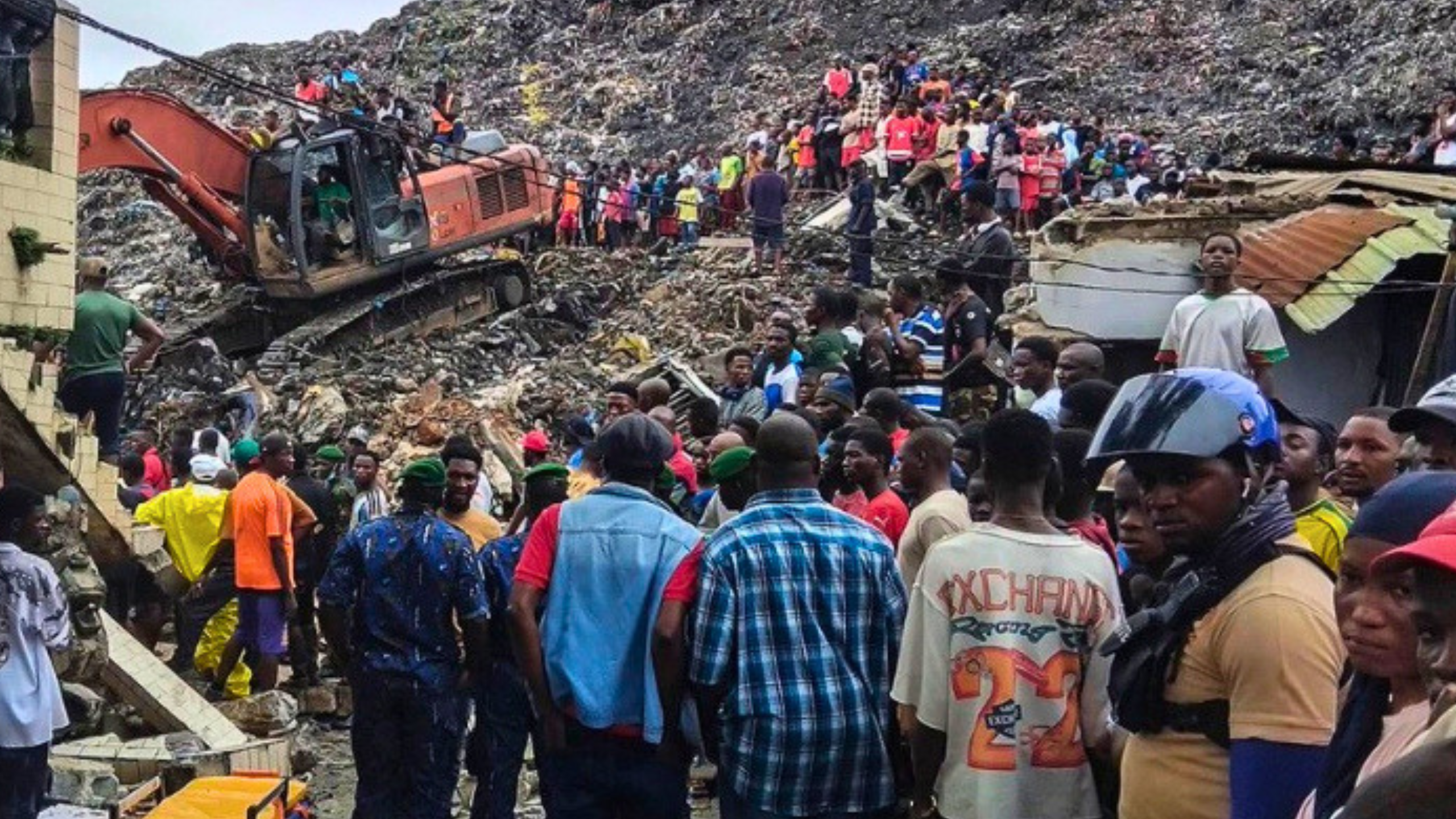
Conakry, Guinea: At least 30 people have died and six others were seriously injured after a massive mound of rubbish collapsed at a landfill in Guinea's capital, Conakry, early Sunday morning. Heavy overnight rain triggered the collapse, sending a huge mass of waste onto nearby homes and makeshift structures in the Dar Es Salam area of the city.
The disaster occurred at approximately 2 a.m. local time on August 23 in the Gbessia commune of Conakry. The affected site, known as the Dar Es Salam landfill, is the largest waste dump in the capital. Authorities said the mound of refuse gave way after heavy rainfall, burying nearby tents, shacks and homes.
Rescue Operation Underway
Emergency and rescue teams were deployed to the landfill following the collapse. Excavators and other equipment were being used to move the enormous amount of waste and search for people who may still be trapped underneath.
Authorities said significant human and material resources had been deployed to locate survivors and recover victims. The continuing rescue operation means casualty figures could potentially change as teams reach areas that remain buried.
The government has confirmed 30 deaths, while six people suffered serious injuries. Reports also indicate that 16 other people sustained less serious injuries, bringing the number of reported injured people to 22.
Heavy Rain Triggered the Collapse
Officials said heavy rain during the night played a major role in the disaster. The rainfall affected the large mound of accumulated waste and contributed to the collapse.
Landfill slopes can become unstable when large quantities of water enter accumulated waste material. Saturated waste can become heavier and less stable, increasing the possibility of movement or a landslide-like collapse.
In this case, the collapsing waste swept into areas where people were living close to the landfill, resulting in the destruction of homes and trapping residents beneath the debris.
Homes Buried Under the Waste
The scale of the collapse was significant. Rescue workers and witnesses reported that the falling waste buried nearby homes and other structures.
Some residents were living in makeshift structures close to the landfill. The collapse therefore affected a community located immediately around the waste site rather than remaining confined to the landfill itself.
The disaster has highlighted the dangers faced by communities living close to large open-air waste dumps, particularly during Guinea's rainy season.
Government Had Planned to Close the Landfill
The tragedy occurred just days after Guinea's government announced plans to close the landfill because of safety concerns.
Guinea's Minister of Territorial Administration, Dienabou Touré, had announced that the site was considered dangerous, particularly during the rainy season, and that waste would be relocated outside Conakry.
According to authorities, residents living close to the landfill had also received eviction notices because of the danger. Some people had left the area, but others remained nearby when the disaster occurred.
The timing has added to concerns about whether the closure and relocation plans could have been implemented quickly enough to protect people living around the site.
Prime Minister Visits the Disaster Site
Guinea's Prime Minister Amadou Oury Bah visited the landfill following the collapse to assess the situation and oversee the government's response.
Authorities urged residents to remain calm and follow instructions from rescue teams and other competent authorities working at the site.
The government has also indicated that remaining families living near the dangerous landfill will be relocated to safer areas.
A Long-Standing Safety Concern
The latest disaster has drawn attention to the risks associated with the landfill and surrounding settlement.
Open-air waste sites can present multiple hazards when large quantities of rubbish accumulate without adequate management. Heavy rain can increase instability, while homes built close to waste mounds can be particularly vulnerable if a collapse occurs.
The disaster is also not the first fatal incident associated with the site. Reports indicate that a similar incident at the landfill in 2017 killed nine people.
The repeated danger has increased pressure for safer waste-management practices and relocation of communities living in high-risk areas.
Why Landfill Collapses Can Be Dangerous
A landfill is more than a simple pile of rubbish. Large waste sites can contain enormous quantities of material accumulated over many years.
When waste is piled high, its weight creates pressure within the mound. Rainwater can penetrate the waste and increase its weight and instability. Poor drainage, steep slopes and inadequate management can further increase the risk of movement.
If a large section of a waste mound suddenly shifts, the material can move rapidly and bury structures located downhill.
The danger becomes particularly serious when residential communities are located close to the landfill.
Rainy Season Increases the Risk
Guinea experiences significant seasonal rainfall, and heavy rain can create additional hazards in urban areas.
Rain can saturate soil and accumulated waste, while intense rainfall can also cause flooding and landslides. Communities living in low-lying or unstable locations can face multiple risks at the same time.
The Conakry disaster has therefore renewed concerns about how waste disposal sites are managed during periods of heavy rainfall.
Search for Survivors Continues
The priority for emergency workers remains the search for people who may still be trapped.
Rescue teams are working carefully because removing large amounts of unstable waste can itself be dangerous. Excavators are being used to clear debris, while teams search areas where victims or survivors could potentially be located.
The final death toll may depend on the progress of the rescue and recovery operation.
Human Impact of the Disaster
Beyond the official casualty figures, the collapse has left families facing the loss of relatives and homes.
One woman, Cire Diallo, told reporters that she lost all five of her children in the disaster. Her account illustrates the devastating personal impact of the collapse on families living near the landfill.
For survivors, the immediate challenges include finding safe shelter, receiving medical treatment and locating missing relatives.
The government has said it intends to relocate families remaining in the area, but longer-term support will be necessary for people whose homes and livelihoods have been affected.
Wider Waste-Management Challenge
The disaster has also highlighted broader challenges surrounding waste management and urban development in Conakry.
As cities grow, the amount of waste they generate can increase rapidly. Managing that waste safely requires appropriate landfill design, drainage systems, monitoring, transportation and long-term planning.
When communities expand toward waste-disposal sites, the potential consequences of a landfill accident can become more severe.
The Guinea disaster demonstrates why waste management is not simply an environmental issue. It is also directly connected to public safety, housing and urban planning.
What Happens Next?
Authorities are expected to continue rescue and recovery operations while assessing the structural and environmental risks at the site.
The government will also face pressure to accelerate plans for closing the landfill and relocating waste to a safer location.
Relocating residents living near hazardous areas is likely to be another major priority. Authorities need to ensure that families moved away from the landfill have access to safe housing and basic services.
How many people died in the Guinea landfill collapse?
The Guinean government reported that 30 people died in the landfill collapse in Conakry.
How many people were injured?
Six people were reported to be seriously injured, while 16 others suffered less serious injuries, according to government figures reported by Reuters and other outlets.
Where did the landfill collapse occur?
The disaster occurred at the Dar Es Salam landfill in the Gbessia area of Conakry, Guinea.
What caused the collapse?
Authorities said heavy overnight rainfall triggered the collapse of a large mound of accumulated waste.
Was the landfill already scheduled for closure?
Yes. Authorities had announced plans to close the landfill because of safety concerns and relocate the waste away from Conakry.
Are rescue operations continuing?
Yes. Rescue workers are using excavators and other equipment to search through the collapsed waste for possible survivors and recover victims.
The collapse of a massive rubbish mound at the Dar Es Salam landfill in Conakry has killed at least 30 people and seriously injured six others, after heavy rain triggered the disaster early Sunday morning.
The tragedy has exposed the serious risks faced by communities living near large waste-disposal sites, particularly during periods of intense rainfall. The fact that the government had already announced plans to close the landfill has also intensified questions about the urgency of relocating residents and improving waste-management infrastructure.
Rescue operations remain underway as authorities search through the debris and assess the full impact of the disaster. The immediate priority is to find anyone who may still be trapped, provide medical care to survivors and support families affected by the collapse.
The incident is likely to renew calls for safer landfill management, stronger urban planning and the relocation of communities living in areas exposed to environmental hazards.
Sources: Reuters, Associated Press and Guinea government statements.
FlashNews24 note: This is a developing disaster story. Rescue operations are continuing and casualty figures may change as authorities complete the search.
Get FlashNews24 App
Get breaking news, India news, World news, technology updates and more directly on your phone.
📱 GET THE APP