Qatar Pushes New Diplomatic Effort to Ease US-Iran Tensions and Reopen Strait of Hormuz
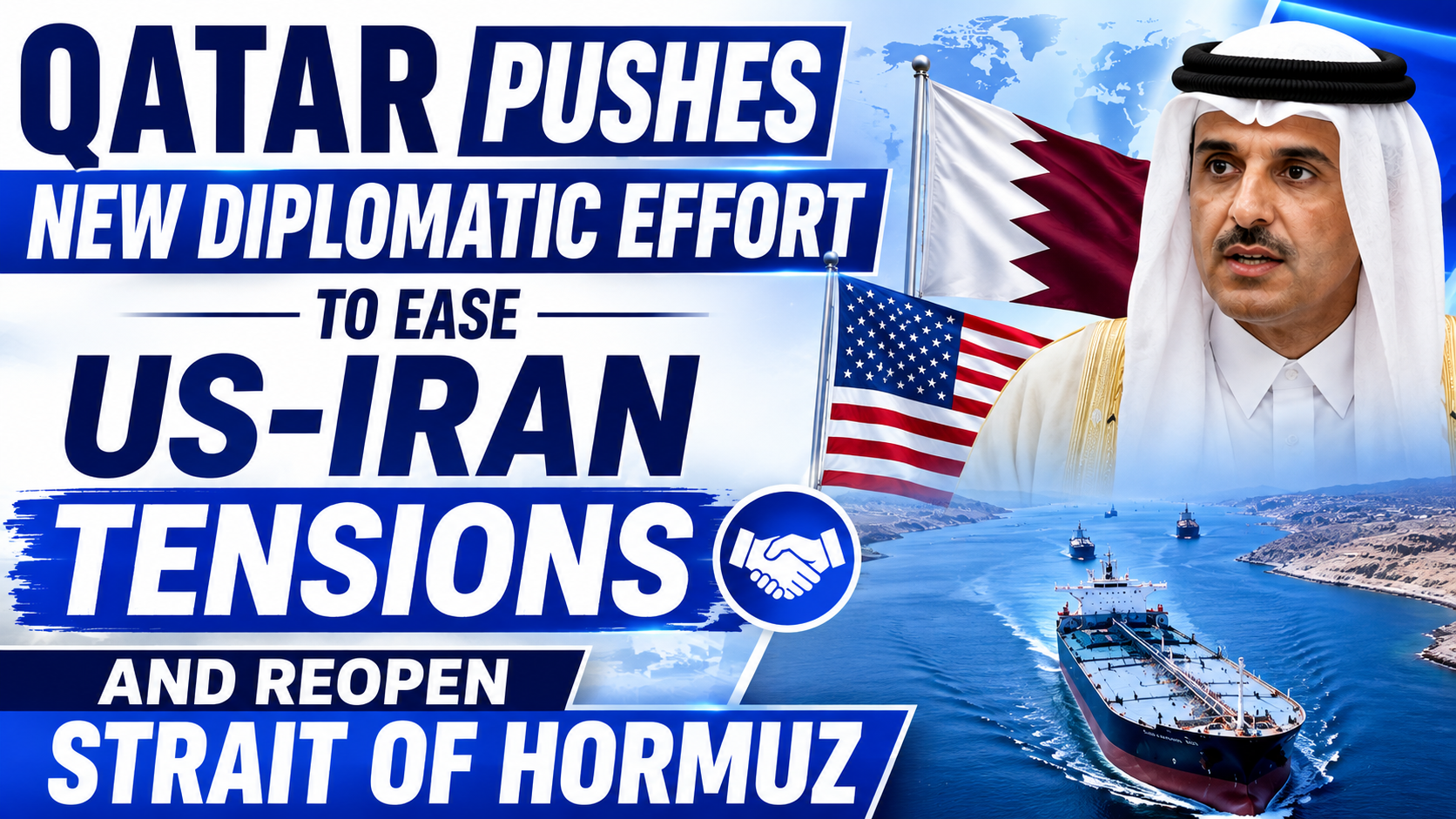
Qatar has stepped up diplomatic efforts to reduce tensions between the United States and Iran, with talks focusing on the future of the strategically important Strait of Hormuz and the possibility of restoring safe commercial shipping.
Qatari Prime Minister Sheikh Mohammed bin Abdulrahman Al Thani travelled to Tehran as regional governments continued efforts to find a diplomatic way forward in the ongoing US-Iran crisis. The discussions come amid continuing uncertainty over the status of the Strait of Hormuz, one of the world's most important energy shipping routes.
Why the Strait of Hormuz Matters
The Strait of Hormuz connects the Persian Gulf with the Gulf of Oman and the wider Arabian Sea.
It is a critical route for international energy shipments. Any prolonged disruption can affect oil and gas supplies, shipping costs and energy prices around the world.
That means developments around the waterway are being closely watched not only by Middle Eastern countries but also by major economies across Asia, Europe and North America.
Qatar Tries to Restart Diplomacy
Qatar has been attempting to mediate between the United States and Iran as tensions continue.
According to Reuters, discussions in Tehran included proposals for a phased reopening of the strait, with possible cooperation involving Oman to address maritime-security concerns and establish a shipping corridor.
The diplomatic effort comes after an earlier ceasefire became fragile because major disagreements over the Strait of Hormuz remained unresolved.
Iran Wants Sanctions Relief
Iran has continued to push for sanctions relief and other conditions as part of any broader agreement.
Tehran has also indicated that it remains open to dialogue, while Washington has maintained pressure through additional economic measures.
The disagreement over sanctions, security and control of the waterway has made negotiations particularly complicated.
Regional Countries Are Getting Involved
Qatar is not the only country trying to reduce tensions.
Pakistan has also been conducting diplomatic outreach, while other regional governments have expressed concern about the impact of the conflict on shipping and energy security.
The wider diplomatic activity reflects fears that continued instability could spread beyond the immediate conflict zone.
Shipping Remains a Major Concern
The Strait of Hormuz is particularly important for global trade.
When ships face security risks in or around the waterway, shipping companies may delay journeys, change routes or demand higher insurance premiums.
Even the possibility of prolonged disruption can therefore affect international markets.
Recent reports have also described another tanker attack in the strait, adding to concerns about maritime security.
What Could Happen Next?
Several outcomes remain possible.
A successful diplomatic agreement could gradually restore commercial shipping and reduce pressure on global energy markets.
However, if negotiations fail and tensions continue, the region could face further disruption.
The key issues will include:
Freedom of navigation
Sanctions on Iran
Maritime security
Control and operation of the Strait of Hormuz
Conditions for a longer-term ceasefire
International guarantees for commercial shipping
Why the World Is Watching
The situation is bigger than a regional diplomatic dispute.
The Strait of Hormuz is connected directly to the global energy system. Any prolonged disruption could influence fuel prices, transportation costs, inflation and economic growth in countries far from the Middle East.
For consumers, higher energy costs can eventually translate into more expensive transportation and goods.
For governments, the crisis creates another challenge at a time when many economies are already dealing with inflation and geopolitical uncertainty.
Qatar's latest diplomatic push could become an important opportunity to reduce tensions between the United States and Iran.
The immediate focus is on restoring maritime security and creating conditions for dialogue around the Strait of Hormuz.
Whether diplomacy can produce a lasting agreement remains uncertain, but the stakes are global bacause the stability of the waterway affects energy markets and international trade.
Get FlashNews24 App
Get breaking news, India news, World news, technology updates and more directly on your phone.
📱 GET THE APP