The Future of Electric Vehicles: How EVs Are Changing the Way We Travel
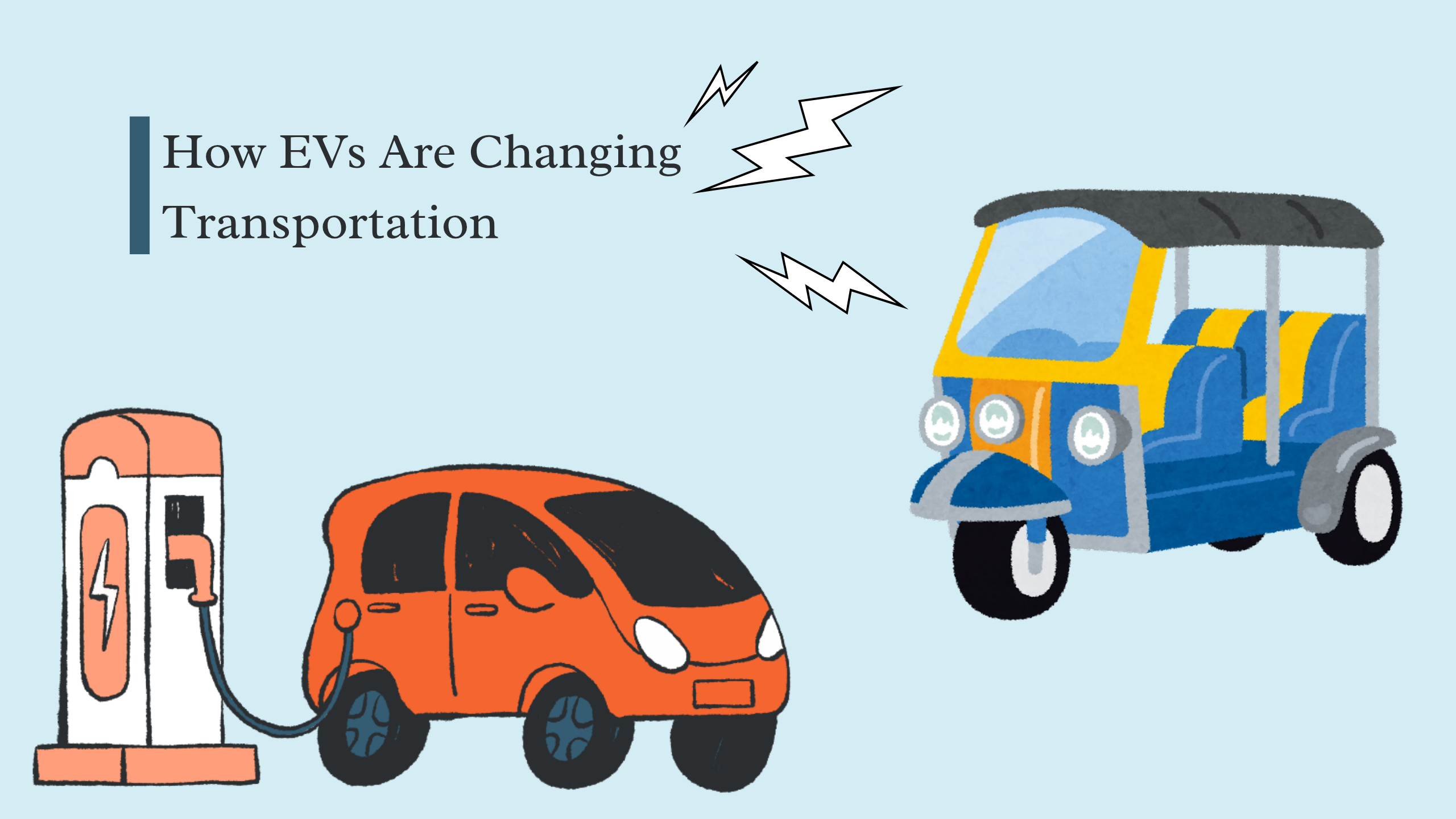
Electric vehicles are becoming an increasingly important part of the global transportation system. From small city cars to buses, delivery vehicles and heavy-duty trucks, electric power is gradually expanding into different parts of the automotive industry.
Unlike conventional vehicles that rely on petrol or diesel engines, electric vehicles use electric motors powered by batteries or, in some cases, other electrical systems. Improvements in battery technology, charging infrastructure and vehicle design are helping manufacturers develop EVs for a growing range of customers.
The transition is not happening at the same speed everywhere. Some countries have rapidly increased EV adoption, while others are still building the infrastructure and policies needed to support widespread use.
But one thing is clear: electric mobility is becoming an important part of the future of transportation.
Why Are Electric Vehicles Becoming More Popular?
One major reason is the development of better battery technology.
Early electric cars faced limitations involving driving range, charging time and battery cost. Modern EVs can offer significantly greater range, while charging technology has also improved.
Governments and automakers are also investing heavily in electric mobility. In many markets, consumers can find an expanding selection of electric cars in different price ranges and vehicle categories.
Another factor is operating cost. Electric motors are highly efficient compared with internal-combustion engines, and EVs generally have fewer moving parts in their drivetrains.
However, the total cost of ownership depends on factors such as electricity prices, vehicle price, maintenance, battery warranty and charging availability.
How Does an Electric Vehicle Work?
A typical battery-electric vehicle uses a large rechargeable battery pack to store electricity.
When the driver presses the accelerator, electrical energy is delivered to an electric motor. The motor converts that energy into mechanical power, which turns the wheels.
During braking, many EVs can use regenerative braking. Instead of allowing all the vehicle's kinetic energy to be lost as heat through conventional brakes, the system can recover part of that energy and send it back to the battery.
This is one reason electric vehicles can be particularly efficient in stop-and-go urban driving.
Charging Infrastructure Is Key
One of the biggest challenges for EV adoption is charging.
People who have access to home charging can often recharge their vehicle overnight. However, drivers who live in apartments or do not have dedicated parking may depend more heavily on public charging stations.
Fast-charging networks are therefore becoming increasingly important.
A strong charging network can reduce concerns about running out of battery during long-distance travel. Charging locations along highways, at shopping centres, workplaces and public parking areas can make electric vehicles more practical for different types of users.
The International Energy Agency has reported continued growth in public charging infrastructure as electric vehicle adoption expands globally. (iea.org)
Battery Technology Could Determine the Next Stage
The battery is one of the most important components of an electric vehicle.
Modern EV batteries mainly use lithium-ion technology, but researchers and companies are working on new battery chemistries and designs.
Future improvements could focus on:
Higher energy density
Faster charging
Longer battery life
Lower production costs
Improved safety
Reduced dependence on certain raw materials
Solid-state batteries are another technology receiving significant attention. They could potentially offer advantages in energy density and safety, although large-scale commercial production remains a major engineering and manufacturing challenge.
What Happens to EV Batteries?
An EV battery does not necessarily become useless when it is no longer suitable for vehicle use.
Depending on its condition, a battery may potentially be reused for stationary energy storage before eventually being recycled.
Battery recycling is becoming increasingly important because recovering valuable materials can reduce waste and potentially reduce the need for some new raw-material extraction.
Building efficient recycling systems will become more important as the number of retired EV batteries increases over the coming decades.
Are Electric Vehicles Better for the Environment?
Electric vehicles do not produce exhaust emissions while driving, which can improve local air quality compared with conventional vehicles.
However, the environmental impact of an EV does not begin and end at the vehicle itself.
Manufacturing the battery requires raw materials and energy. Electricity used to charge an EV also comes from different sources depending on the country or region.
As electricity generation becomes cleaner, the climate benefits of electric vehicles can increase.
The overall environmental impact therefore depends on the complete lifecycle of the vehicle, including manufacturing, electricity generation, driving and eventual recycling.
Electric Buses and Commercial Vehicles
The EV transition is not limited to passenger cars.
Electric buses are being introduced in cities around the world, particularly where reducing urban air pollution and noise is a priority.
Delivery vans and other commercial vehicles are also suitable for electrification because many operate predictable routes and return to a central depot where they can recharge.
Heavy trucks are more challenging because they require large amounts of energy and may need very fast charging or alternative technologies.
Nevertheless, advances in batteries and charging systems could expand electric transportation into more commercial sectors.
How EVs Could Change Cities
The growth of electric vehicles could influence urban planning.
Electric cars are quieter at low speeds than conventional vehicles, which can reduce traffic noise. Cities may also increasingly combine EV charging infrastructure with parking facilities, workplaces and public transport systems.
However, replacing petrol and diesel cars with EVs does not automatically solve traffic congestion.
An electric car still occupies road space.
For that reason, future transportation systems are likely to involve a combination of electric vehicles, public transportation, cycling, walking and other forms of mobility.
The Importance of Affordable EVs
One of the biggest questions for the future is affordability.
Premium electric vehicles are already available in many markets, but widespread adoption requires options for middle-income and budget-conscious consumers.
Lower battery costs can help manufacturers reduce vehicle prices. Local manufacturing, stronger supply chains and increased production volumes may also influence affordability.
The International Energy Agency expects electric vehicle sales to continue expanding globally, although adoption rates vary considerably between markets. (iea.org)
EVs in Developing Markets
Developing countries face different challenges.
Charging infrastructure may be limited, electricity networks may require upgrades, and consumers may be more sensitive to vehicle prices.
At the same time, electric two-wheelers, three-wheelers, buses and small commercial vehicles could provide important opportunities.
In countries where motorcycles and scooters are widely used, electrification of two-wheelers could potentially happen faster than the transition to large passenger cars.
Local conditions will therefore determine which types of electric vehicles become most successful.
What Does the Future Look Like?
The future of transportation is unlikely to be based on a single technology.
Battery-electric vehicles will probably become increasingly important, but other technologies may also have roles in specific applications.
Hydrogen, hybrid systems and other low-carbon technologies could potentially be useful for certain transport sectors depending on cost, infrastructure and technical requirements.
The most important changes are likely to come from a combination of better batteries, wider charging networks, smarter energy systems and more affordable vehicles.
Electric vehicles are changing transportation from the way cars are powered to the way cities think about mobility.
The transition still faces challenges, including charging infrastructure, battery costs, raw-material supply, electricity demand and affordability. But technological progress and growing investment are gradually addressing many of these issues.
For consumers, the future could bring more vehicle choices, faster charging and longer driving ranges. For cities, it could mean cleaner and quieter transportation.
Electric vehicles are not a complete solution to every transportation problem, but they are becoming an increasingly important part of the global move toward more efficient and potentially lower-emission mobility.
FlashNews24 Insight: The next major stage of the EV revolution may not simply be about selling more electric cars. It could be about building an entire ecosystem around them — from batteries and charging networks to renewable electricity, recycling and smarter transportation systems.
Get FlashNews24 App
Get breaking news, India news, World news, technology updates and more directly on your phone.
📱 GET THE APP