
AI Cancer Screening in India: How Artificial Intelligence Could Detect Disease Earlier
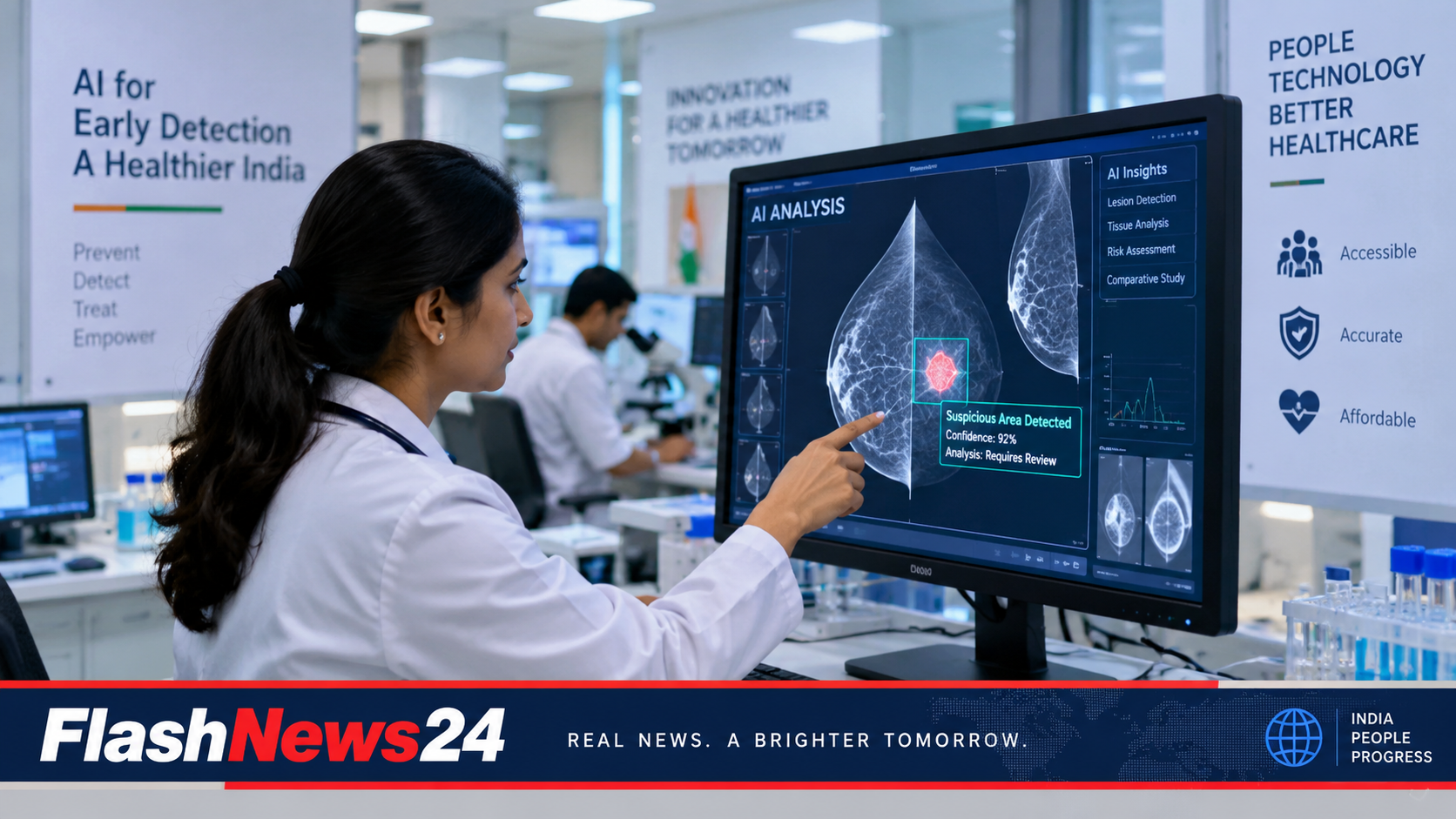
Artificial intelligence is moving beyond chatbots and productivity tools and increasingly entering fields where technology can have a direct impact on people's lives.
One of the most promising areas is healthcare, where AI is being developed to help doctors analyse medical images, identify patterns and detect diseases at an earlier stage.
At the 18th BRICS Summit in New Delhi, an AI-enabled cervical cancer screening technology is among the Indian deep-tech innovations being showcased at the Bharat Innovates Exposition. The exhibition features 37 innovations across areas including healthcare, clean energy, robotics and advanced engineering.
The development highlights a bigger question: Can artificial intelligence make cancer screening faster and more accessible in India?
What Is AI-Based Cancer Screening?
Cancer screening is designed to identify signs of disease before symptoms become serious. Traditionally, screening involves medical professionals examining samples, scans or other clinical information.
AI systems can assist this process by analysing large amounts of medical data and looking for patterns that may be difficult or time-consuming to identify manually.
In image-based screening, for example, an AI model can be trained using large collections of medical images. Once trained, it can examine a new image and identify areas that may require closer attention from a doctor.
The technology does not necessarily replace a medical professional. Instead, its most useful role may be to act as an additional screening or decision-support tool.
Why Is Cervical Cancer Screening Important?
Cervical cancer is one of the diseases where early detection can make a major difference to treatment outcomes.
Regular screening can identify abnormal changes before they develop into advanced disease. However, access to screening can vary significantly depending on location, healthcare infrastructure and availability of trained professionals.
This is where AI could potentially provide an advantage.
If an AI-assisted system can help healthcare workers identify suspicious cases quickly, it could support screening programmes in areas where specialist medical expertise is limited.
How Could AI Help Doctors?
One potential advantage of AI is speed.
A healthcare professional may need to examine a large number of samples or images. An AI system can process information rapidly and flag cases that appear unusual.
Doctors can then focus more attention on those cases instead of treating every image or sample as equally urgent.
AI can also provide consistency. Human specialists can naturally differ in how they interpret medical images or samples, while a properly validated AI system applies the same trained model to every case.
However, consistency does not automatically mean accuracy. AI systems can make mistakes, which is why medical validation and human oversight remain essential.
Could AI Make Healthcare More Accessible?
India has a large population and significant differences in healthcare access between major cities and smaller towns or rural areas.
Advanced AI tools could potentially help bridge part of that gap by supporting healthcare workers who do not have immediate access to specialists.
For example, an AI-assisted screening system could flag potentially abnormal cases and help determine which patients require further examination.
This does not mean that every patient could be diagnosed by an algorithm. Rather, AI could become one component of a larger healthcare system involving doctors, laboratories, hospitals and follow-up care.
What Are the Risks?
Healthcare AI also comes with important challenges.
The biggest concern is accuracy. A system that incorrectly identifies a healthy patient as having a disease could create unnecessary anxiety and additional medical procedures. On the other hand, missing a genuine abnormality could delay diagnosis.
AI models can also perform differently when they are used with populations or medical equipment that differ from the data used during training.
Privacy is another major issue. Medical information is highly sensitive, and healthcare organisations must ensure that patient data is handled securely.
For these reasons, AI-based medical tools need rigorous testing and regulatory oversight before they can be widely deployed.
Will AI Replace Doctors?
The more realistic future is cooperation between doctors and AI rather than complete replacement.
Doctors bring clinical experience, patient history and the ability to understand complicated medical circumstances. AI can provide rapid analysis and identify patterns across large datasets.
A doctor may therefore use AI as an additional source of information while making the final clinical decision.
This approach could be particularly useful in screening, where the objective is often to identify people who may need further medical evaluation.
Why India's Deep-Tech Push Matters
The AI cancer-screening innovation being displayed at the BRICS Summit is part of a broader effort to promote India's deep-tech ecosystem.
The Bharat Innovates Exposition includes technologies in healthcare, marine robotics, solar power and electric mobility, demonstrating that India's innovation landscape extends well beyond consumer technology.
For India, successful healthcare AI could have significance beyond the domestic market. If technologies are clinically validated and can operate efficiently in different healthcare environments, they could eventually become useful in other countries facing similar shortages of healthcare resources.
What Happens Next?
The most important stage for medical AI is moving from promising technology to proven clinical usefulness.
Researchers and healthcare organisations need to test these systems in real-world environments and determine how accurately they identify disease. They also need to evaluate how the technology affects doctors' workload, patient outcomes and healthcare costs.
If those evaluations produce strong results, AI could gradually become a normal part of screening and diagnostic workflows.
But that process should happen carefully. Healthcare technology needs evidence, validation and responsible deployment rather than simply being adopted because it uses artificial intelligence.
AI-based cancer screening represents one of the more meaningful applications of artificial intelligence because it could potentially help healthcare professionals detect disease earlier and manage large screening programmes more efficiently.
The technology showcased at India's BRICS innovation exposition demonstrates the country's growing interest in applying AI to real-world healthcare challenges.
The future of medical AI will ultimately depend not on how impressive the technology sounds, but on whether it can demonstrate accuracy, safety, affordability and real benefits for patients.
If those conditions are met, artificial intelligence could become a powerful supporting tool in India's effort to make early disease detection more accessible.
Get FlashNews24 App
Get breaking news, India news, World news, technology updates and more directly on your phone.
📱 GET THE APP