
BREAKING: Greek F-4 Phantom Crashes at Athens Air Show, Two Pilots Killed
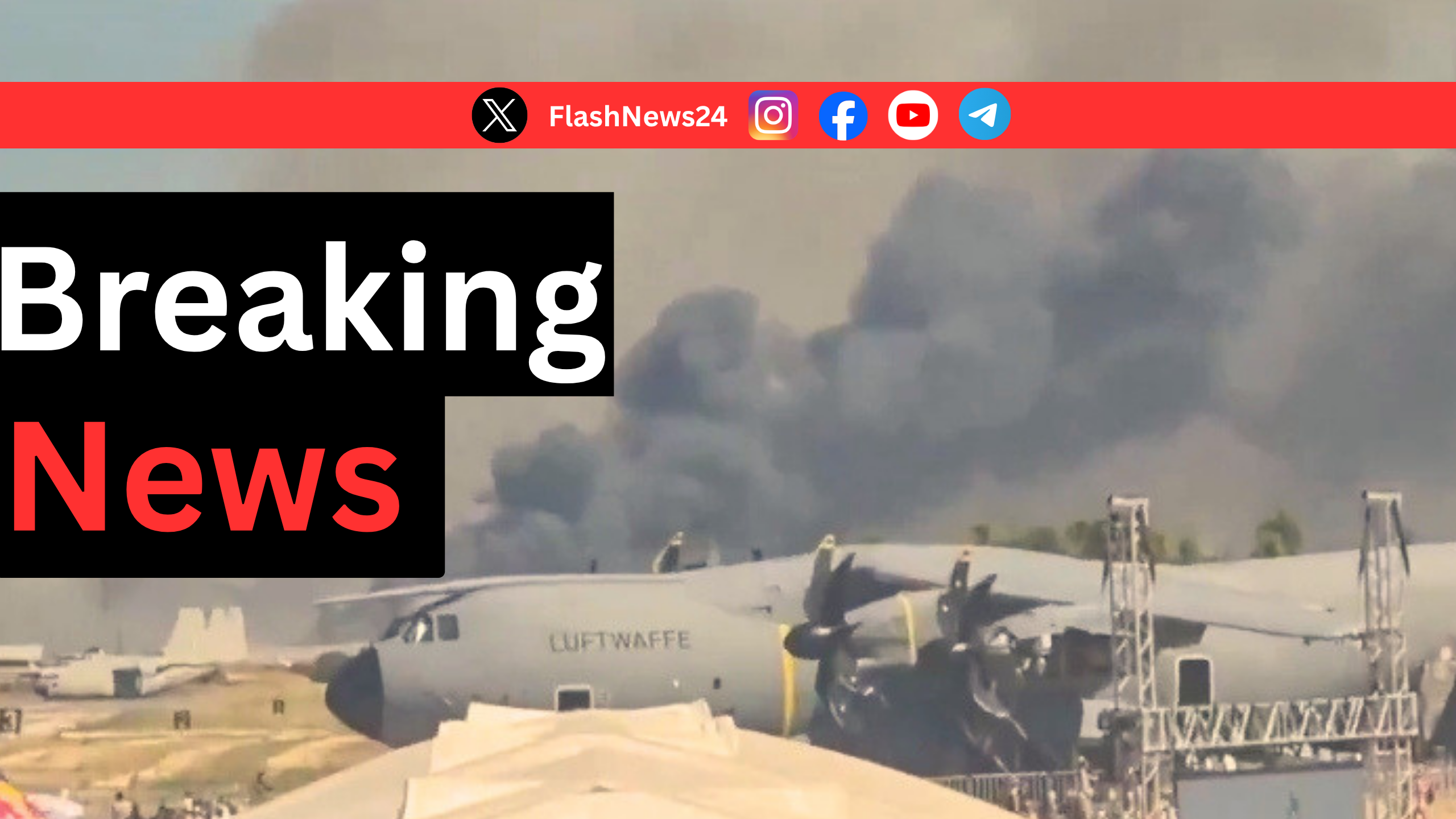
A routine day of aviation displays at Greece’s Athens Flying Week turned into a tragedy on Saturday after a Greek Air Force F-4 Phantom fighter jet crashed during a low-altitude demonstration at Tanagra Air Base, north of Athens.
The two pilots aboard the aircraft were killed in the accident. Thousands of people were attending the air show when the fighter went down, but no injuries among spectators or nearby residents were reported.
The crash produced a large column of black smoke that could be seen from the air-show area. Emergency crews rushed to the site and fought fires that broke out following the impact.
What happened?
The two-seat F-4 Phantom was taking part in an aerial demonstration when it lost altitude during a low-level manoeuvre.
Video footage from Greece's public broadcaster ERT showed the aircraft making a low turn shortly before it crashed and burst into flames. The crash site was approximately two kilometres from the airport.
Because the aircraft was flying at low altitude, there was very little time available to recover if the crew encountered a serious problem.
The exact sequence of events immediately before the crash is still being investigated.
Two pilots lost their lives
Both members of the aircraft's crew died in the accident.
Their deaths have transformed what was supposed to be a major aviation celebration into a day of mourning for Greece's Air Force.
Authorities have not yet announced a confirmed cause of the crash. Investigators will need to examine the aircraft wreckage, available video footage, flight information and other evidence before reaching conclusions.
That means mechanical failure, pilot error or any other possible explanation should not be treated as confirmed at this stage.
Spectators escaped injury
One of the most important aspects of the accident is that the aircraft did not crash into the main spectator area.
Thousands of visitors had gathered at Tanagra Air Base for Athens Flying Week, but reports said there were no injuries among spectators or nearby residents.
The crash nevertheless triggered an immediate emergency response.
Authorities moved to control the resulting fire while organisers dealt with the crowd and the developing situation.
The event was suspended following the accident.
A major emergency response
The crash started fires around the impact area, requiring a large firefighting operation.
According to reports, 85 firefighters and 11 firefighting aircraft and helicopters were involved in efforts to contain the blaze.
The response was particularly important because the accident occurred in an area where thousands of people had gathered for the air show.
Keeping the fire away from the spectator zone became an immediate priority.
What is Athens Flying Week?
Athens Flying Week is one of the major aviation events held in Greece.
The 2026 edition is taking place at Tanagra Air Force Base on September 5 and 6, featuring military and civilian aircraft and aerial demonstrations.
The event brings aviation enthusiasts together to watch flying displays and see aircraft used by different air forces and aviation organisations.
The Greek F-4 Phantom was among the aircraft scheduled to participate in the demonstrations.
The accident therefore occurred during one of the most visible parts of the event, with spectators watching the aircraft from the air-show area.
Why the F-4 Phantom is significant
The F-4 Phantom II is not a new-generation fighter.
It first entered service decades ago and became one of the most recognisable military aircraft of the Cold War era.
Greece has operated the aircraft for many years, including upgraded F-4E versions.
Despite its age, the Greek Air Force has continued operating modernised Phantoms as part of its military aviation fleet.
That long service history makes the aircraft particularly significant to Greek military aviation.
It has also become familiar to aviation enthusiasts who follow Greek air displays.
The accident raises an important aviation-safety question
Air-show flying is very different from ordinary passenger aviation.
Demonstration pilots deliberately perform manoeuvres designed to show an aircraft's capabilities. Some of these manoeuvres are conducted at relatively low altitude, where there is less room to recover from an unexpected problem.
That does not mean that the crash was caused by the nature of the manoeuvres
The cause remains unknown.
Instead, the accident highlights why air-show demonstrations require strict planning, carefully defined flight paths, emergency procedures and separation between aircraft and spectators.
Investigators will determine whether any technical or operational factor contributed to the accident.
What investigators will look for
The investigation will likely focus on the aircraft's final moments.
Among the questions investigators may examine are:
Was there any technical problem before the crash?
Did the aircraft experience a sudden loss of power or control?
Was the aircraft following its planned demonstration profile?
What happened during the final turn?
Did the crew have enough altitude and time to respond?
Was there any indication of a warning or abnormality before the crash?
These questions cannot be answered reliably from videos alone.
Investigators will need technical evidence before determining what happened.
The human cost comes first
While the F-4 Phantom and the technical aspects of the crash will naturally attract aviation interest, the most important part of this story is the loss of two lives.
The pilots were carrying out a demonstration in front of a large public audience when the accident occurred.
Their deaths will be felt across Greece's military aviation community, particularly among colleagues and families.
The investigation may eventually explain how the crash happened, but it cannot change the outcome for the two pilots.
What happens next?
The immediate emergency response will be followed by a formal investigation.
Authorities will secure the crash area and examine the wreckage as part of efforts to reconstruct the aircraft's final flight.
The investigation could take time.
Early eyewitness accounts and videos may help establish a timeline, but they cannot by themselves establish the cause.
For that reason, claims circulating on social media should be treated carefully until Greek authorities release verified findings.
A Greek Air Force F-4 Phantom crashed during a low-altitude demonstration at Tanagra Air Base on September 5, killing both pilots.
The accident occurred during Athens Flying Week, where thousands of spectators had gathered to watch aircraft demonstrations.
A major emergency response was launched after the crash caused fires and sent thick black smoke into the sky. Fortunately, no spectator injuries were reported.
The cause of the accident remains under investigation.
For now, the focus is on the two pilots who lost their lives and on determining exactly what happened during the aircraft's final moments.
FlashNews24 will update this story when authorities release confirmed information.
*This is a developing story. Details may change as the official investigation progresses.*
Get FlashNews24 App
Get breaking news, India news, World news, technology updates and more directly on your phone.
📱 GET THE APP