
G7 Energy Crisis Meeting: Why France Wants Action as Oil Prices Rise
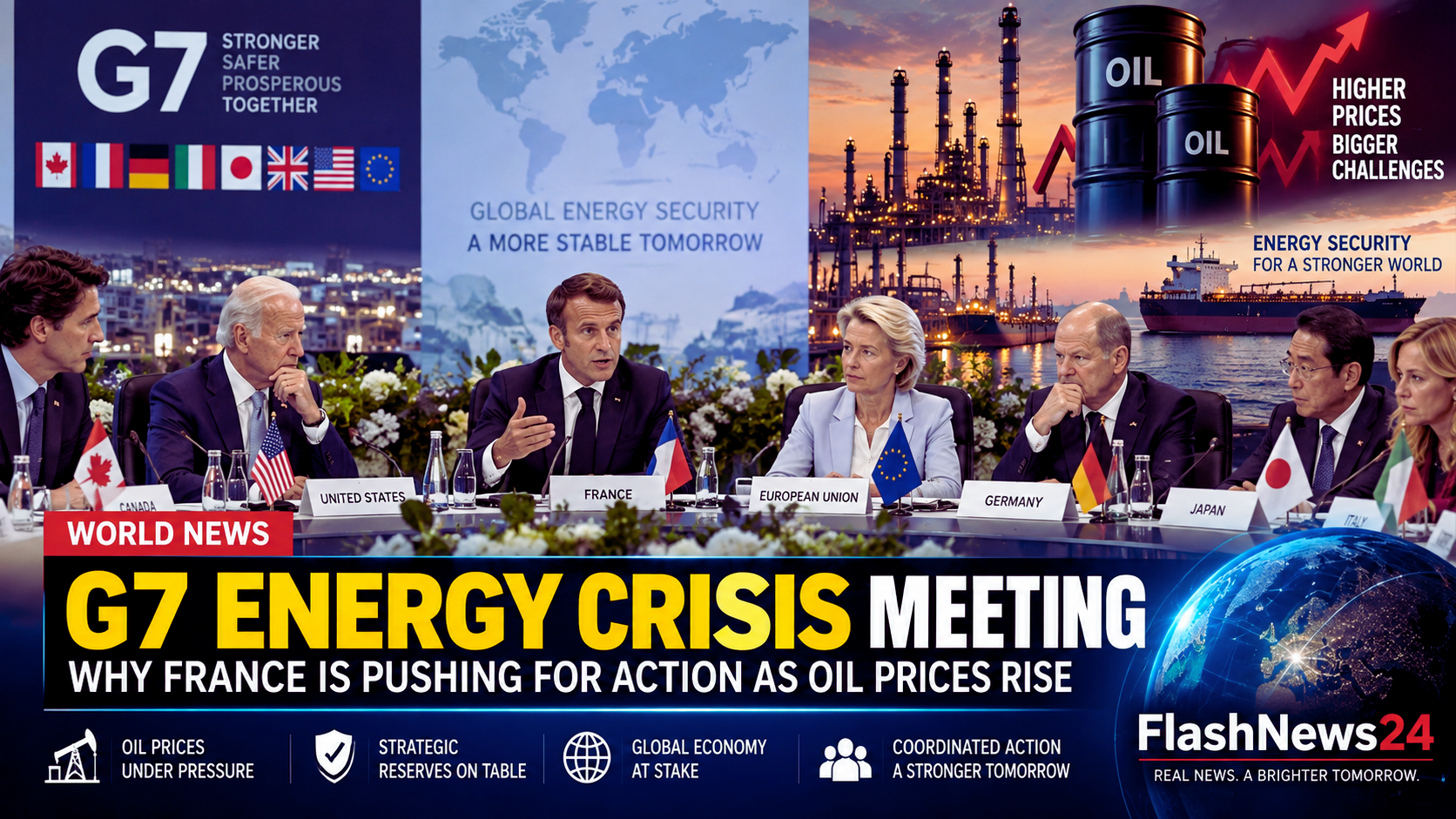
Paris, September 18, 2026: France is preparing to bring G7 countries together to discuss the global energy crisis as disruptions linked to the conflict in the Middle East continue to put pressure on oil markets.
French President Emmanuel Macron said the G7 would meet in the coming weeks to discuss ways to strengthen energy security and examine measures including the possible release of strategic oil reserves.
The development comes as crude oil prices have moved sharply higher and governments face growing concerns about fuel costs, inflation and the wider impact of disruptions to global energy supplies.
Why Is the G7 Discussing the Energy Crisis?
The current energy pressure is closely connected to instability in the Middle East.
The region is home to some of the world's largest oil-producing countries and contains several important transportation routes used to move energy to international markets.
When conflict threatens production facilities, pipelines, ports or shipping routes, oil markets can quickly react because traders begin pricing in the possibility of supply disruptions.
That can increase the cost of crude oil even before a major physical shortage occurs.
For countries that import large quantities of energy, the effects can eventually reach transportation, manufacturing, electricity generation and household expenses.
What Did Macron Announce?
Macron said G7 countries would hold discussions in the coming weeks to examine the energy situation and possible measures to protect supplies.
One option under consideration is the use of strategic energy reserves.
Strategic reserves are stockpiles of crude oil or refined petroleum products maintained by governments to provide additional supply during major disruptions.
Releasing reserves can increase available supply in the short term, potentially reducing some pressure on markets.
However, reserves are limited resources and cannot permanently solve a structural supply problem.
How Do Strategic Oil Reserves Work?
Countries maintain strategic petroleum reserves as a form of emergency protection.
Under normal conditions, these reserves are kept largely untouched.
During a major supply disruption, governments can release some of the stored oil into the market.
The objective is to bridge the gap between disrupted supply and normal market conditions.
The effectiveness of a reserve release depends on several factors, including how much oil is released, how quickly it reaches the market and how long the underlying disruption lasts.
If a crisis continues for many months, governments have to consider how quickly they are using their remaining stocks.
Why Are Oil Prices Important for Consumers?
Crude oil is an important input for the global economy.
It affects petrol and diesel prices, aviation fuel, shipping costs and many industrial processes.
Higher fuel prices can increase transportation costs for companies moving goods between factories, warehouses and consumers.
Those higher costs can eventually contribute to higher prices for products and services
Airlines are particularly sensitive to fuel prices because jet fuel represents a major operating expense.
Shipping companies also face higher costs when marine fuel becomes more expensive.
Europe Faces a Particular Challenge
European economies are closely watching the energy situation because higher fuel and energy costs can put pressure on both households and businesses.
Germany, France, Italy and other European economies have large industrial sectors that depend on reliable and affordable energy.
If energy costs remain elevated for a long period, companies may face higher production expenses.
That can affect competitiveness and investment decisions.
Governments may also face pressure to provide financial support to households and businesses affected by higher energy bills.
Could Releasing Oil Reserves Lower Prices?
A coordinated release could increase short-term supply and potentially reduce some market pressure.
But the effect would depend heavily on the size and duration of the disruption.
If global oil production and transportation remain significantly affected, a reserve release may only provide temporary relief.
Markets also react to expectations.
If traders believe the underlying supply problem will continue, oil prices could remain elevated even after governments announce additional reserves.
That is why governments usually treat strategic stockpiles as an emergency tool rather than a permanent solution.
What Does the G7 Have to Coordinate?
The G7 includes some of the world's major advanced economies.
Coordination can involve discussions about strategic reserves, energy imports, supply routes, production capacity and measures to reduce demand.
Countries can also coordinate with international organisations and other major energy-consuming economies.
The goal is to prevent individual countries from responding in ways that unintentionally increase pressure elsewhere.
For example, if several major economies simultaneously compete for limited supplies, global prices could rise further.
Coordinated action can help governments manage such risks.
What About Natural Gas?
The energy crisis is not limited to crude oil.
Natural gas markets are also closely connected to geopolitical developments.
Europe relies on gas for electricity generation, heating and industrial activity.
If oil prices remain high and energy markets become more uncertain, governments may also pay greater attention to gas storage levels and alternative supply arrangements.
Macron has said France will work with European institutions on improving gas storage as the region prepares for the winter season.
How Could Airlines and Shipping Companies Be Affected?
Airlines and shipping companies are among the businesses most exposed to fuel-price changes.
Higher fuel costs can reduce profit margins if companies cannot immediately pass those costs to customers.
Airlines may respond by adjusting ticket prices, routes or capacity.
Shipping companies can face similar pressures through higher operating expenses.
Consumers may eventually notice the effect through more expensive air travel and higher prices for goods transported internationally.
Could the Energy Crisis Increase Inflation?
Energy is an important component of inflation.
When petrol, diesel, electricity and transportation costs rise, businesses may pass some of those expenses to consumers.
This can create broader price pressure across an economy.
Central banks therefore pay close attention to major energy shocks.
If inflation remains elevated for longer than expected, policymakers may face difficult decisions over interest rates.
That creates another connection between geopolitical events and household finances.
What Are Governments Watching?
Several indicators will be particularly important over the coming weeks:
- Global crude oil prices
- Oil production levels
- Shipping activity through major maritime routes
- Refinery output
- Strategic reserve levels
- European gas storage
- Fuel prices
- Inflation expectations
A sustained improvement in shipping and production could ease pressure.
On the other hand, additional disruptions could make the situation more difficult.
Why This Matters Beyond the G7
Although the proposed discussions involve G7 economies, energy prices affect countries around the world.
Emerging economies that import large quantities of crude can be particularly sensitive to higher prices because energy imports affect their trade balances and foreign-exchange requirements.
Higher fuel costs can also increase transportation expenses for food and essential goods.
This means an energy crisis in one region can create economic effects far beyond the countries directly involved in the conflict.
What Happens Next?
The immediate focus will be on the G7 discussions and developments in the Middle East.
Governments will have to determine whether existing energy supplies are sufficient and whether additional measures are required.
A coordinated strategic-reserve release could provide temporary support, but long-term stability will depend on restoring reliable production and transportation.
For consumers and businesses, the key issue is therefore not only today's oil price but how long elevated energy costs remain in place.
France's plan to convene G7 countries on the energy crisis highlights the growing economic impact of Middle East-related disruptions.
The possible use of strategic oil reserves could provide additional supply to markets, but reserve releases are designed as temporary emergency measures rather than a permanent solution.
The coming weeks will be important for global energy markets as governments monitor oil production, shipping routes, fuel prices and inflation.
For households and businesses around the world, the biggest question is whether current energy pressures ease or develop into a longer-lasting global cost shock.
Get FlashNews24 App
Get breaking news, India news, World news, technology updates and more directly on your phone.
📱 GET THE APP