
SEMICON India 2026: Can India Become a Global Semiconductor Hub?
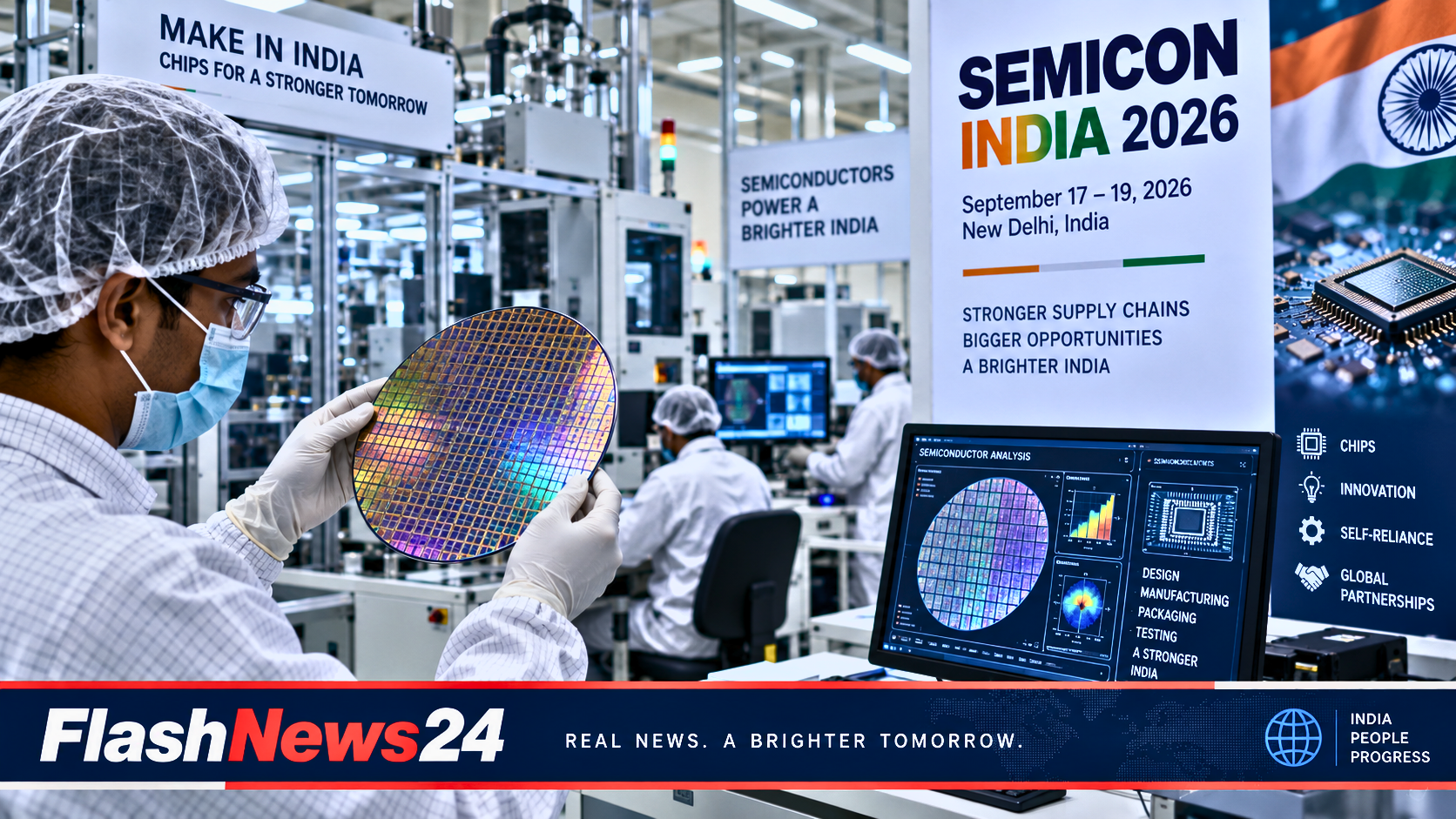
India's semiconductor ambitions are entering an important phase as SEMICON India 2026 is set to take place in New Delhi from September 17 to 19. The event comes at a time when India is trying to move beyond assembling electronic devices and build a deeper semiconductor manufacturing ecosystem.
For years, India has been one of the world's largest markets for smartphones, computers, automobiles and other electronics. However, a large part of the semiconductor value chain has historically remained outside the country.
The bigger question now is whether India can turn its growing electronics demand and government support into a competitive chip ecosystem.
Why Are Semiconductors Important?
Semiconductors are the foundation of modern technology.
They are used in smartphones, computers, cars, medical equipment, industrial machinery, communication systems and artificial-intelligence infrastructure.
The rapid expansion of AI has made advanced chips even more strategically important. AI data centres require enormous computing power, while electric vehicles and modern automobiles increasingly depend on semiconductor components.
This means countries that can build reliable semiconductor supply chains gain an important economic and strategic advantage.
India's Semiconductor Challenge
India has made significant progress in electronics assembly. The country now manufactures and assembles large numbers of smartphones and other electronic products.
However, assembling a device is different from producing the sophisticated components inside it.
Advanced semiconductor manufacturing requires enormous capital investment, highly specialised equipment, engineering expertise, reliable utilities and carefully controlled manufacturing environments.
India therefore needs to build several parts of the ecosystem at the same time — including chip fabrication, packaging and testing, component manufacturing, design and supporting suppliers.
Why SEMICON India 2026 Matters
SEMICON India 2026 is important because it brings attention to the practical side of India's semiconductor ambitions.
The event is expected to focus on the technologies, investments and partnerships needed to develop the country's semiconductor ecosystem.
That makes the event more significant than a conventional technology exhibition.
The real test for India is whether announcements and investment commitments can eventually translate into functioning factories, trained workers, local suppliers and commercially successful semiconductor products.
From Smartphone Assembly to Component Manufacturing
One of India's biggest opportunities is moving further up the electronics value chain.
India already assembles a very large share of the smartphones sold or exported from the country. But domestic value addition remains much lower because many important components are still imported.
The government is therefore trying to encourage local production of components such as printed circuit boards, camera modules, displays and other electronic parts.
Recent policy initiatives are designed to increase domestic value addition and create a wider electronics manufacturing base.
If successful, this could gradually reduce India's dependence on imported components while creating new manufacturing opportunities.
Chips Are Not Just About Factories
A semiconductor industry needs more than fabrication plants.
Chip design is another major area where India already has significant expertise. Many global semiconductor companies employ Indian engineers for chip design, verification and related research.
The next step is to connect this design talent with domestic manufacturing and packaging capabilities.
Such integration could allow more Indian companies to move from providing engineering services to developing their own semiconductor products and technologies.
The AI Connection
Artificial intelligence is making semiconductor capabilities even more important.
AI models require powerful processors and specialised accelerators. Data centres around the world are therefore investing heavily in computing infrastructure.
India is also expanding its data-centre and AI ecosystem, increasing demand for advanced computing hardware.
A stronger domestic semiconductor ecosystem could eventually help Indian companies participate more deeply in this growing market.
However, India should not expect to immediately compete with the world's most advanced chip manufacturers.
Building a complete semiconductor ecosystem takes years and requires continuous investment.
What Are the Biggest Obstacles?
The semiconductor industry is one of the most technically demanding manufacturing sectors.
Factories require extremely high standards of cleanliness and precision. Even tiny contaminants can affect production.
The industry also depends on specialised machinery, advanced materials and a reliable supply chain.
India must therefore attract technology partners, develop specialised talent and build supporting industries around semiconductor facilities.
Cost competitiveness will be another challenge.
Chip manufacturing requires enormous capital expenditure, and global companies already operate large-scale facilities in countries with decades of semiconductor experience.
Why Supply-Chain Security Matters
Recent disruptions in global trade have shown how dependent modern economies are on international supply chains.
Semiconductor shortages can affect everything from smartphones and cars to industrial equipment.
For India, developing domestic semiconductor capabilities is therefore not only an economic opportunity. It is also a way to make critical supply chains more resilient.
The objective does not have to be complete self-sufficiency.
Instead, India can aim to become an important part of a diversified global semiconductor network.
What Could India Gain?
If India's semiconductor strategy succeeds, the benefits could extend well beyond chip factories.
A stronger ecosystem could create high-skilled engineering jobs, attract foreign investment and encourage new technology companies.
It could also strengthen industries such as automobiles, telecommunications, consumer electronics, defence and artificial intelligence.
Most importantly, successful semiconductor manufacturing could help India capture more value from the enormous electronics market it already serves.
What Should We Watch After SEMICON India 2026?
The most important developments will be concrete rather than symbolic.
Investors and policymakers will need to demonstrate progress in areas such as factory construction, production capacity, technology partnerships, component manufacturing and workforce development.
Investment announcements are important, but actual production will ultimately determine whether India's semiconductor strategy is succeeding.
The industry will also need to prove that Indian-made semiconductor products can compete on quality, reliability and cost.
SEMICON India 2026 arrives at an important moment for India's technology ambitions.
India has already established itself as a major electronics assembly and semiconductor-design destination. The next challenge is building the manufacturing and component ecosystem required to capture more value inside the country.
The transition will not happen overnight. Semiconductor manufacturing requires years of investment, specialised knowledge and reliable supply chains.
But if India can convert policy support and investment commitments into functioning production capabilities, the country could become a much more important player in the global semiconductor industry.
For India, the semiconductor opportunity is ultimately bigger than making chips. It is about building the technology, talent and manufacturing ecosystem needed for the next generation of the digital economy.SEO package
Get FlashNews24 App
Get breaking news, India news, World news, technology updates and more directly on your phone.
📱 GET THE APP