
US Strikes Three Iranian Oil Tankers After Navy Warships Were Targeted With Missiles
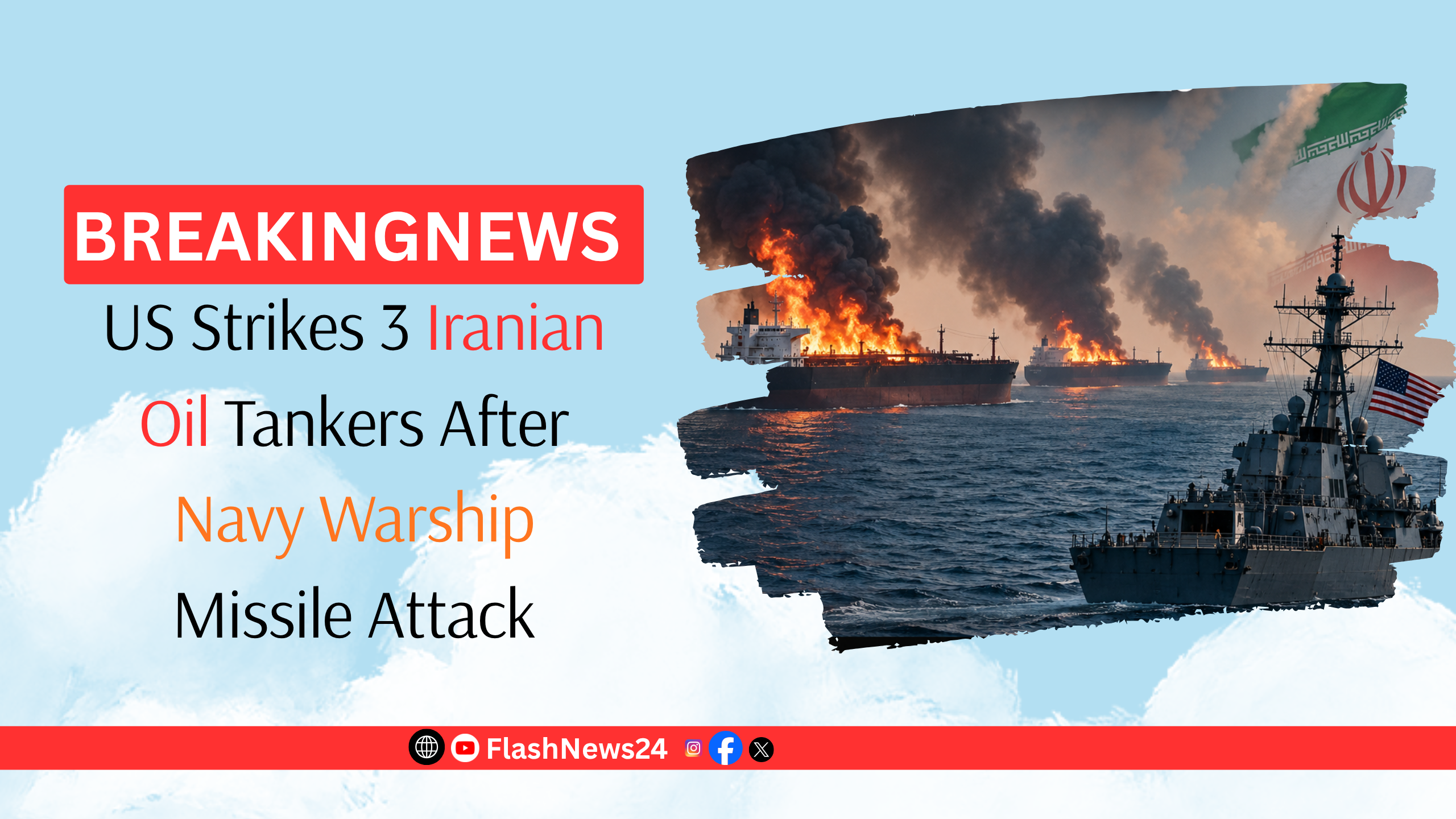
The conflict between the United States and Iran has taken another major turn after the U.S. military said it struck three Iranian oil tankers following missile attacks targeting American Navy warships in the region.
According to the U.S. military, an American aircraft carrier and a destroyer came under multiple Iranian attacks while operating in the region. The U.S. said the warships successfully avoided the attacks and that no American personnel were injured.
The subsequent strikes against the Iranian vessels represent a significant escalation because the targets were commercial oil tankers rather than conventional military ships.
What happened to the three tankers?
U.S. Central Command said its forces struck three Iranian oil carriers in separate locations.
One tanker was disabled off the coast of Kharg Island, Iran's major oil-export hub. Another was disabled near Jask, while a third, which was reportedly unladen, was destroyed in the Gulf of Oman.
The U.S. military said two of the vessels were permanently disabled and described the third as destroyed.
Iranian state media had earlier reported that an Iranian tanker was hit near Kharg Island, showing that the attack had already become a major point of tension before the full details of the U.S. operation emerged.
Why did the U.S. target the tankers?
Washington says the vessels were connected to what it described as a shadow oil network that helps generate revenue for Iran's Islamic Revolutionary Guard Corps (IRGC) and associated regional groups.
U.S. Central Command presented the strikes as a direct response to attacks against American military forces. CENTCOM commander Adm. Brad Cooper said the U.S. would impose a greater economic cost if American ships were attacked.
The U.S. warning also raises the possibility of further attacks against Iran's oil-shipping infrastructure if Washington believes American forces remain under threat.
Why is Kharg Island important?
Kharg Island is one of the most strategically important locations in Iran's oil industry.
The island hosts a major crude-oil export terminal, making any military activity around it particularly sensitive for global energy markets. The Washington Post reported that roughly 90% of Iran's oil exports move through the Kharg area.
That means attacks involving oil tankers or infrastructure near Kharg Island could have consequences well beyond the immediate military confrontation.
Any sustained disruption to Iranian oil exports could put additional pressure on regional energy supplies, particularly if the wider conflict also affects shipping through the Strait of Hormuz.
The Strait of Hormuz factor
The latest confrontation is also significant because of its proximity to the Strait of Hormuz, one of the world's most important energy shipping routes.
Large volumes of oil and other energy products pass through the narrow waterway connecting the Persian Gulf with the Gulf of Oman.
If military tensions continue to interfere with commercial shipping, insurers, shipping companies and energy traders could face increased risks and costs. A prolonged disruption could potentially put upward pressure on international oil prices.
However, the immediate impact will depend on whether commercial shipping continues normally and whether the conflict expands further.
Iran and the U.S. give sharply different accounts
The U.S. military says its strikes were a response to Iranian missile attacks against American Navy ships.
Iran, meanwhile, has accused the United States of attacking an Iranian tanker near Kharg Island. Iranian officials and state media have also reported their own military responses, but details of some of those claims remain difficult to independently verify.
Because the situation is developing rapidly, individual claims from both sides should be treated carefully until independent confirmation becomes available.
Why this matters
The latest strikes are important for three major reasons.
First, the confrontation is moving deeper into commercial shipping. Oil tankers are now directly caught up in the military escalation.
Second, Iran's oil exports are becoming an increasingly important pressure point. Targeting vessels connected by Washington to Iran's oil network could reduce Tehran's ability to generate revenue.
Third, the risk to regional shipping is increasing. Any further attacks involving the Strait of Hormuz or nearby waters could have consequences for international energy markets.
The strikes therefore represent more than another exchange of military attacks. They connect the conflict directly to oil exports, commercial shipping and global energy security.
What happens next?
The key question is whether the latest strikes remain a limited military response or develop into a broader campaign against Iranian oil shipments.
The U.S. military has already warned that it could take further action against Iran's oil fleet if American forces continue to be targeted.
At the same time, Iran has shown no indication that it intends to simply accept increased pressure on its shipping and energy sector.
For international markets, the biggest issue will be whether commercial vessels can continue moving safely through the Persian Gulf and Strait of Hormuz.
For now, the situation remains highly fluid, and further military or diplomatic developments could change the picture quickly.
The U.S. says it struck three Iranian oil tankers after American Navy warships were targeted by Iranian missiles. Washington says the tankers were connected to an oil network supporting the IRGC, while Iran has accused the U.S. of attacking its shipping.
With the strikes occurring around key Iranian oil-export and shipping routes, the incident could have consequences for regional security, oil exports and global energy markets if the confrontation continues.
FlashNews24 will continue to follow the latest developments and update this story as more independently verified information becomes available.
Get FlashNews24 App
Get breaking news, India news, World news, technology updates and more directly on your phone.
📱 GET THE APP