
Man Brings Sister’s Remains to Bank After Being Denied Access to Her Money

Mallipashi — A deeply troubling incident has emerged from a rural village, where a man’s attempt to access his deceased sister’s bank savings reportedly led to an extreme and distressing act.
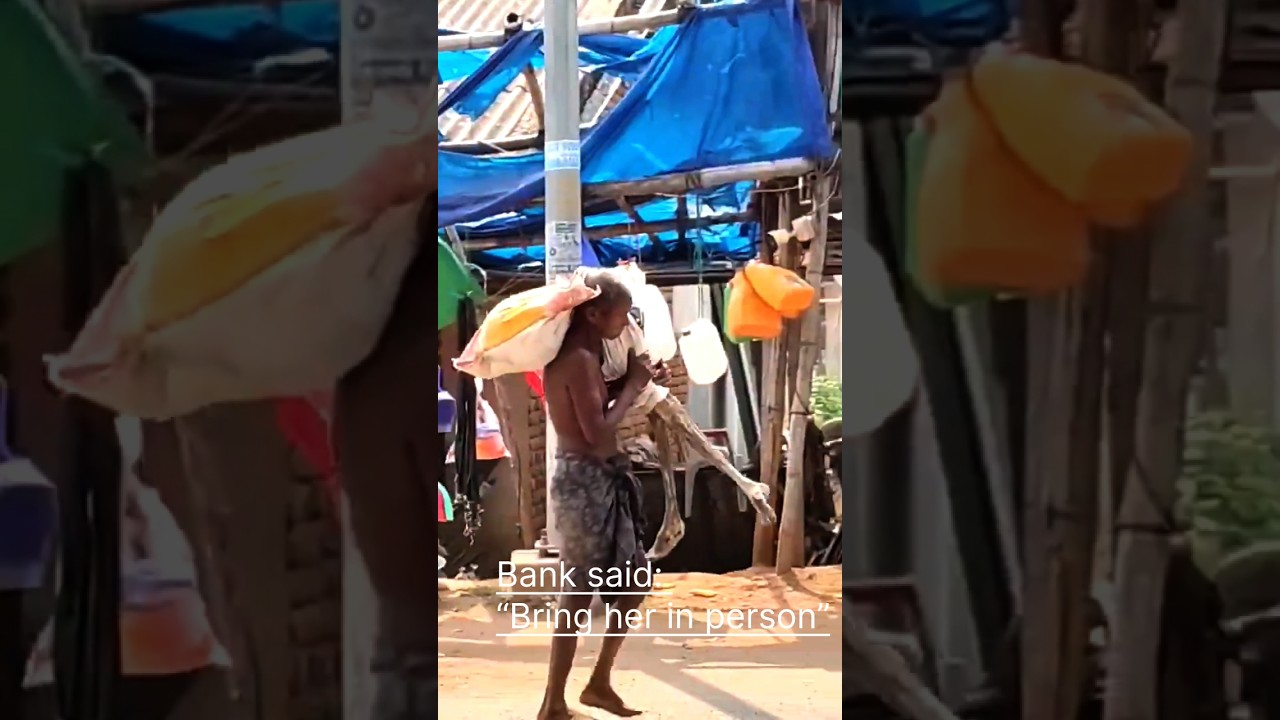
According to reports, Jeetu Munda, a resident of Mallipashi, lost his sister two months ago. Following her death, approximately ₹19,300 remained in her bank account — money he says he urgently needed for household expenses.
Munda reportedly made several visits to the bank in an effort to withdraw the remaining funds. However, he was allegedly told that the account holder must be physically present to authorize the withdrawal.
Despite explaining that his sister had passed away, he claims his requests were not acknowledged. Without formal documentation or a clear process explained to him, he found himself unable to access the money.
Situations like this are not uncommon in rural areas, where awareness of banking procedures and documentation requirements may be limited. For many, navigating formal systems can become a significant challenge, especially during times of grief.
In what has been described as a desperate and tragic step, Munda allegedly brought his sister’s skeletal remains to the bank to prove that she was no longer alive.
The act has drawn widespread attention and raised serious concerns about how institutions handle sensitive cases involving death and financial access. While the authenticity of all details is still being verified, the incident has sparked strong reactions across communities and social platforms.
Typically, in such cases, banks require legal documentation such as:
- A death certificate
- Proof of relationship
- Identity verification
In some cases, a nominee or legal heir certificate
Without these documents, bank officials are often unable to release funds due to regulatory requirements. However, critics argue that clearer communication and guidance could prevent such extreme situations.
This incident highlights a broader issue — the gap between formal financial systems and the realities faced by individuals in rural or underserved regions.
Lack of awareness, limited access to documentation, and rigid processes can create barriers for people who are already dealing with personal loss. In many cases, individuals may not know the correct steps to follow or how to obtain necessary documents.
The situation has led to calls for banks and institutions to adopt a more empathetic and accessible approach when dealing with vulnerable individuals.
- Providing clear guidance on required procedures
- Offering assistance in obtaining necessary documents
- Training staff to handle sensitive cases with empathy
Balancing regulatory compliance with human understanding is seen as essential in preventing similar incidents.
The case of Jeetu Munda underscores the human cost of bureaucratic rigidity when compassion is absent. While rules and procedures are necessary, the manner in which they are applied can have profound
As discussions continue, the focus remains on ensuring that systems are not only efficient but also humane — especially for those facing difficult circumstances.
Get FlashNews24 App
Get breaking news, India news, World news, technology updates and more directly on your phone.
📱 GET THE APP